
Web Application Reconnaissance — From Zero to Professional Attack Surface Mapping
Learn how to systematically discover, analyze, validate, and document the attack surface of a web application — from initial scope definition to a complete reconnaissance report.
This practical guide covers a structured and repeatable Web Application Reconnaissance methodology designed for ethical security testing, bug bounty programs, CTFs, and authorized lab environments.
What You’ll Learn:
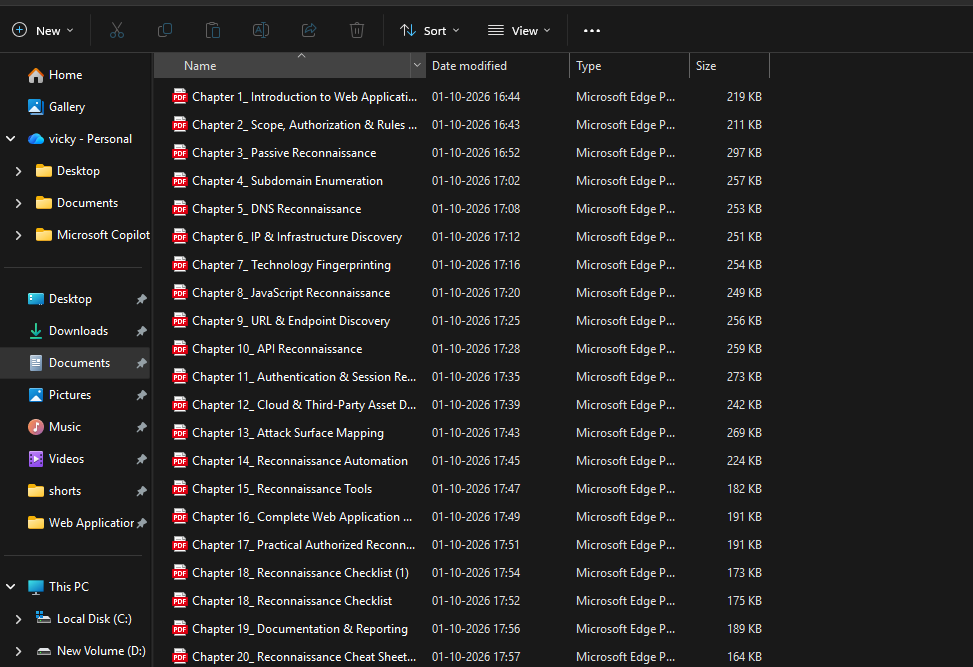
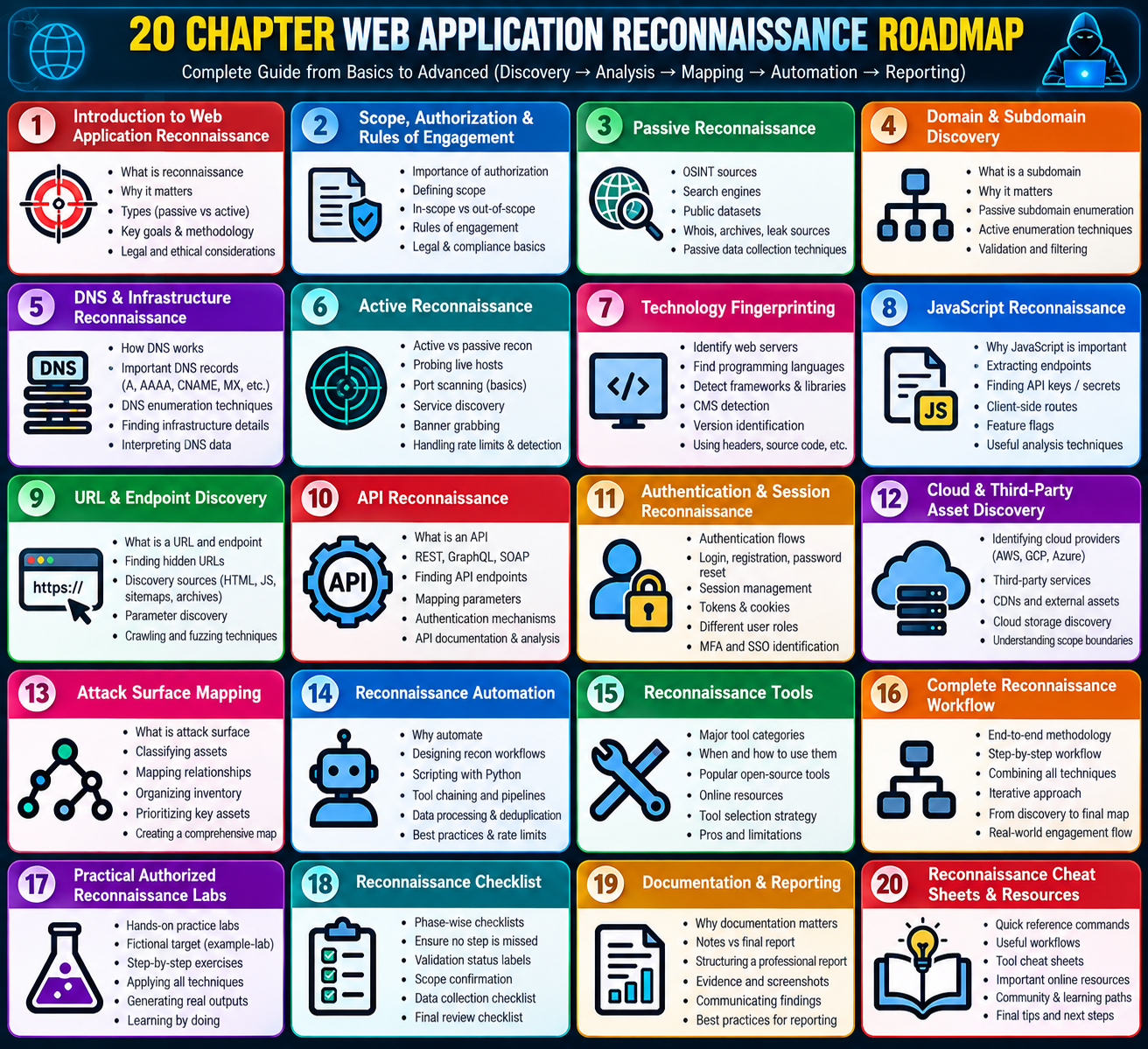
Chapter 1 — Introduction to Web Application Reconnaissance
Chapter 2 — Scope, Authorization & Rules of Engagement
Chapter 3 — Passive Reconnaissance
Chapter 4 — Subdomain Enumeration
Chapter 5 — DNS Reconnaissance
Chapter 6 — IP & Infrastructure Discovery
Chapter 7 — Technology Fingerprinting
Chapter 8 — JavaScript Reconnaissance
Chapter 9 — URL & Endpoint Discovery
Chapter 10 — API Reconnaissance
Chapter 11 — Authentication & Session Reconnaissance
Chapter 12 — Cloud & Third-Party Asset Discovery
Chapter 13 — Attack Surface Mapping
Chapter 14 — Reconnaissance Automation
Chapter 15 — Reconnaissance Tools
Chapter 16 — Complete Web Application Reconnaissance Workflow
Chapter 17 — Practical Authorized Reconnaissance Labs
Chapter 18 — Reconnaissance Checklist
Chapter 19 — Documentation & Reporting
Chapter 20 — Reconnaissance Cheat Sheets & Resources
Complete Reconnaissance Workflow:
Scope Definition → Passive Reconnaissance → Domain & Subdomain Discovery → DNS & Infrastructure Recon → Technology Fingerprinting → JavaScript Reconnaissance → URL & Endpoint Discovery → API Reconnaissance → Authentication & Session Recon → Cloud & Third-Party Discovery → Attack-Surface Mapping → Validation → Documentation & Review
Practical Authorized Labs:
The guide also includes structured hands-on labs using fictional targets and datasets. These exercises help you practice the complete reconnaissance process in a safe and authorized environment.
You will learn how to move from:
Scope → Discovery → Analysis → Validation → Attack-Surface Mapping → Documentation
Professional Documentation:
Learn how to transform raw reconnaissance data into structured, evidence-based and reproducible documentation using sources, timestamps, validation status, findings, and organized asset information.
Who Is This For?
• Cybersecurity Beginners
• Aspiring Penetration Testers
• Bug Bounty Learners
• Cybersecurity Students
• Security Researchers
• CTF Participants
• Anyone interested in Web Application Reconnaissance
Important:
All practical exercises are designed for authorized environments. The techniques should only be used against systems you own or where you have explicit permission to test.
Build the skill of understanding and mapping the attack surface before moving toward security testing.

Reviews
There are no reviews yet.